Crocus sativus
Saffron
Growing, harvesting, and buying genuine saffron — from corm to kitchen.
Know what you’re buying
About Saffron
Whether you’re growing your own Crocus sativus or purchasing saffron from a store, it’s important to know what you are buying, and if it’s the real thing. There are lots of vendors that cut and flavor flower petals with saffron extract and sell it as the real thing. If you are paying less than around twenty dollars a gram you are probably getting this type of product. This is a labor intensive process and responsible growers buy healthy organically grown corms from reputable sources and implement responsible horticultural processes to take the resulting products of corms and spice to market.
The water test
A quick way to figure out if you have genuine saffron is to drop a few threads into hot water. Real saffron releases a golden-yellow color after a few minutes, not red, without dissolving or losing its red hue. Fake saffron (especially dyed imposters) will release color instantly and may turn the water red.
Choosing healthy corms
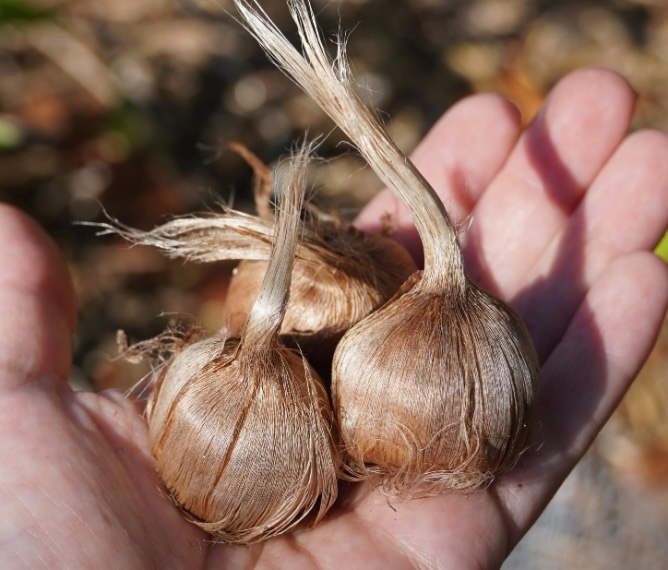
Before you even get to the saffron threads, choosing the healthy bulbs called “corms” is key. Genuine Crocus sativus bulbs are round and have a papery outer layer that has a silky sheen and feel to it. They are taupe to light brown and about ¾ to 1¼ inches circumference and should be firm. Soft bulbs are rotting and will not grow. Look for the remnants of fine white roots on the bottom and the classic pigtail on the top. Saffron only grows from crocus sativus corms — anything else is probably not real. No saffron comes from seeds or cuttings.
Crocus sativus flowers
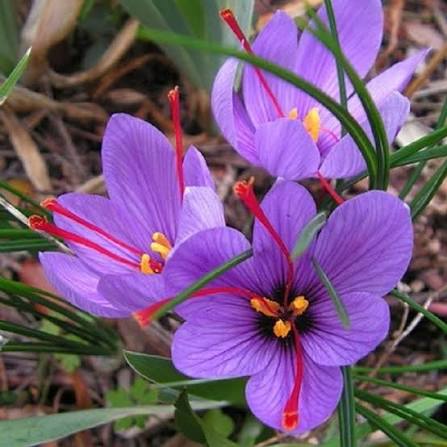
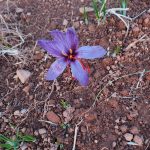
Crocus sativus flowers bloom in autumn (September–November) and have three distinctive characteristics: the petals, the stigma, and their fragrance.
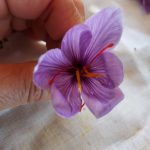
Saffron flowers are lavender and purple with veined petals; each bloom usually having three stigmas. They are dark bright orange/red, long, and slightly curled at the ends — this is what you are growing for, the actual saffron spice. At the base they will have a pale creamy section where they attach to the flower stem. Around the center each has normally three yellow stamens full of pollen.
Fresh saffron smells strongly of honey, not like turmeric, chili or any other red spice. Anything else is sketchy and should not be dried or eaten. And — some purple autumn crocuses are toxic.
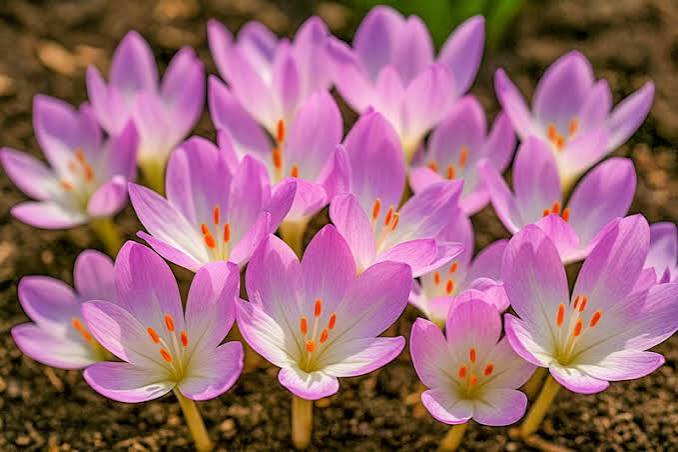
Fall blooming crocus — know the difference

Growing Saffron
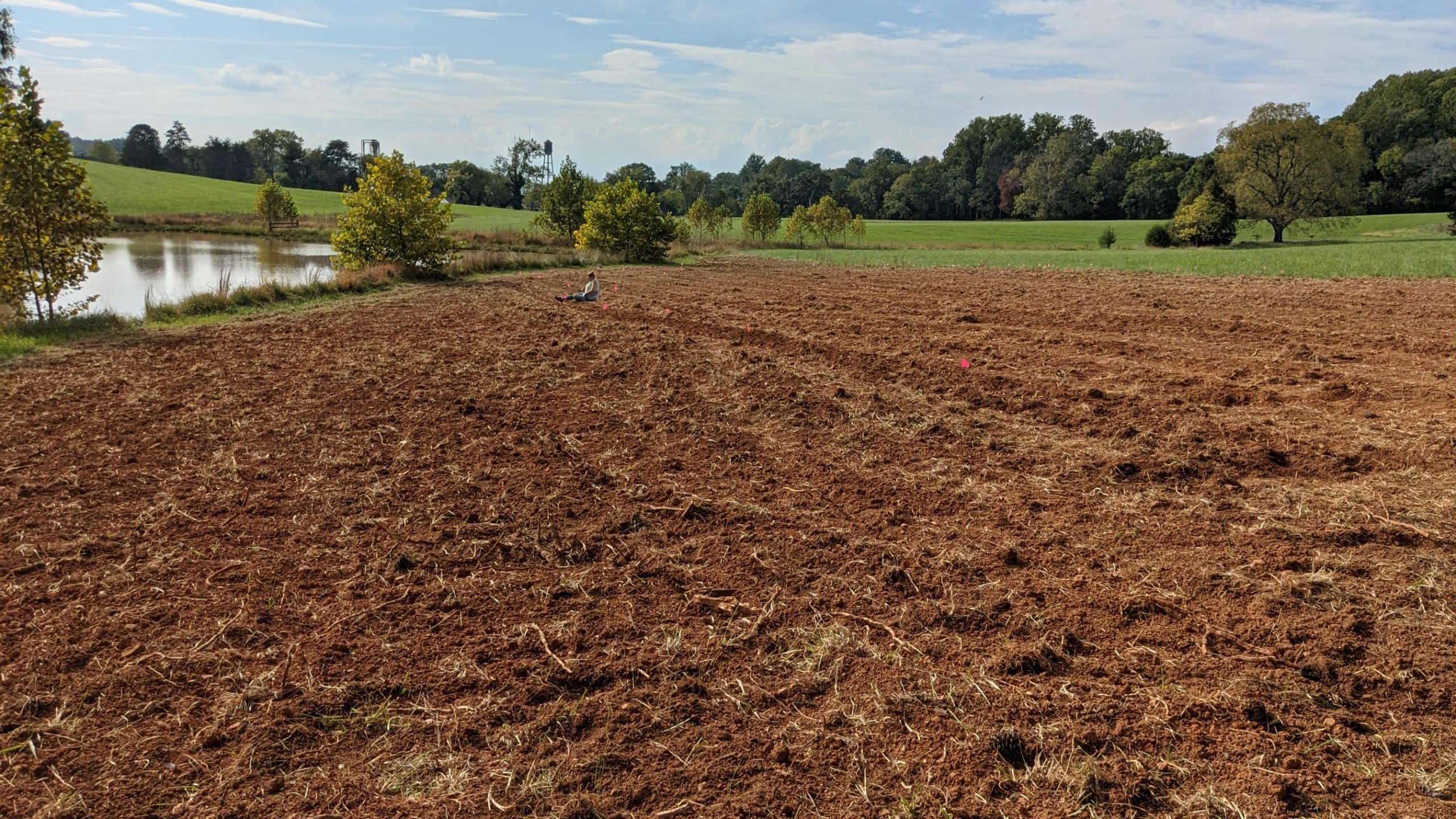
Saffron thrives in sunny spots that mirror the conditions found in wine regions — warm summers and cool winters. Almost any location worldwide can become a saffron haven if it meets these criteria.
The key to a thriving saffron crop lies beneath the surface. Saffron prefers deep, well-drained soil, whether it’s clay, sandy or loamy. Good drainage is also your ally against fungal diseases. A quarterly dose of organic fertilizer after blooming does wonders for your soil’s condition, warding off diseases and encouraging corm growth and flowering.
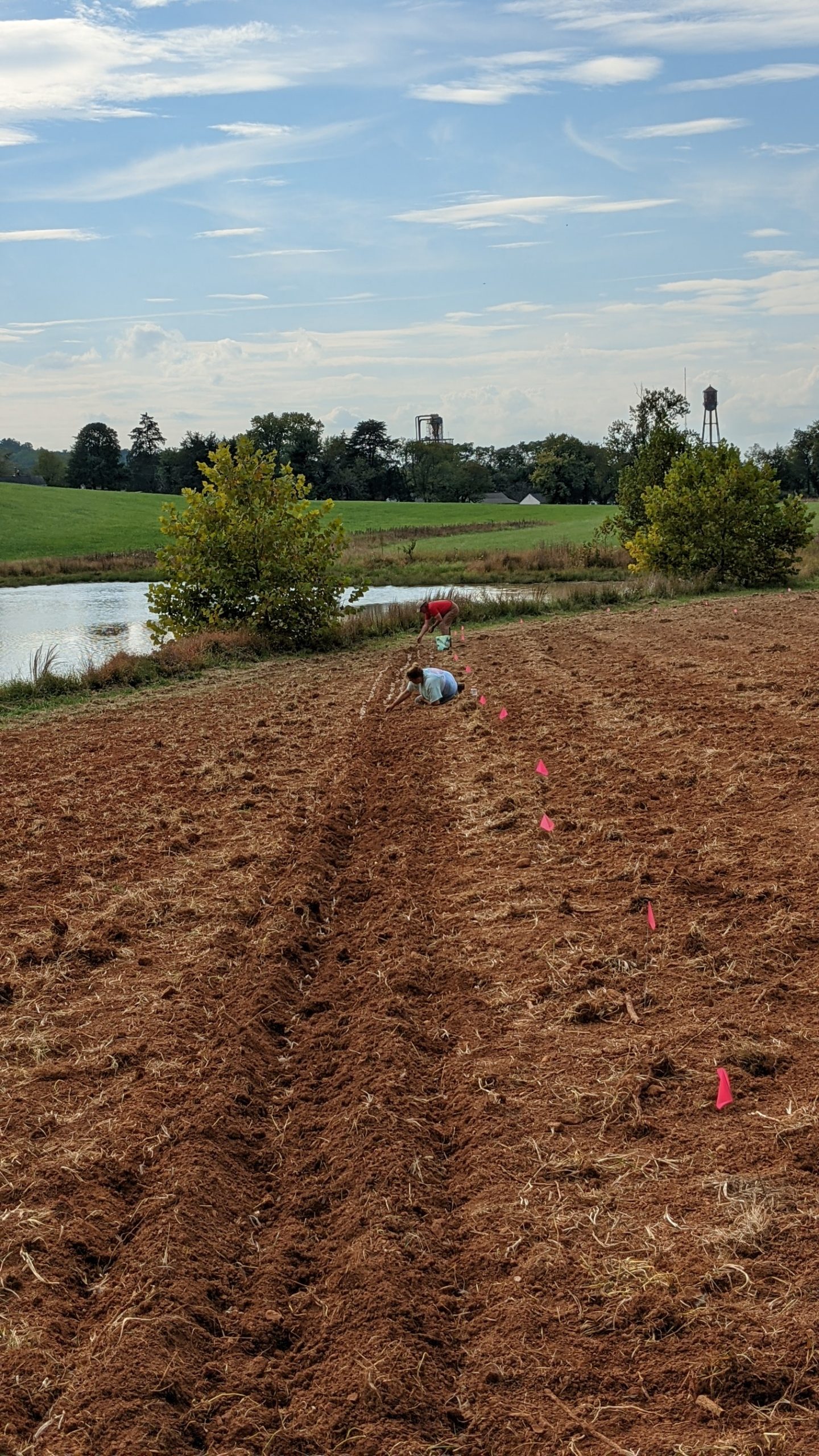
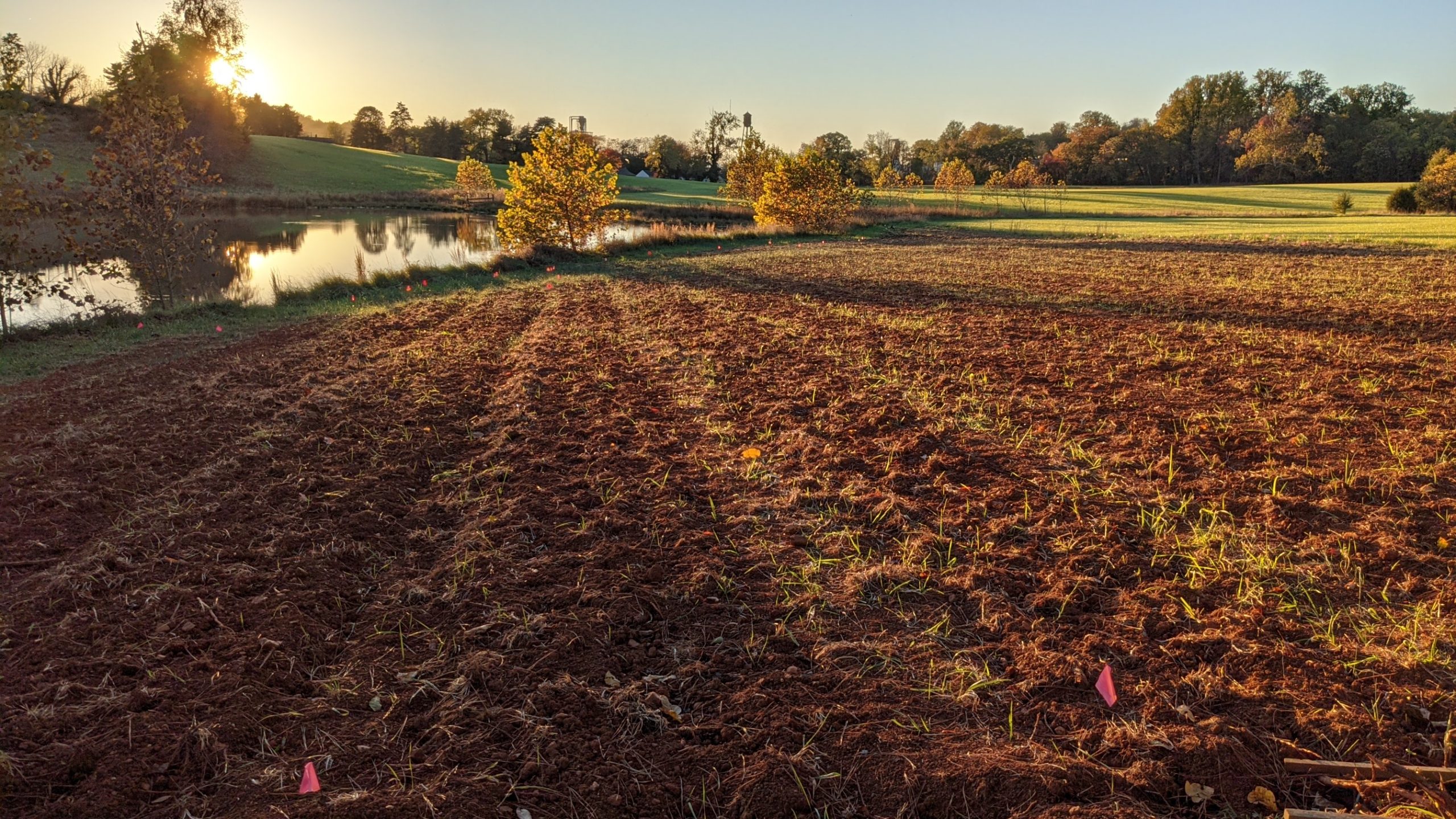
Since we grow hay at the farm we use a layer of straw as mulch. We usually have a bale or two that loses its binding which is perfect (the big six-foot ones) to spread over the rows. We put weed barrier between the rows, and our chickens add some great organic fertilizer. Saffron plants need occasional rain, so the natural cycles we have in Virginia are perfect. I have rarely had to water. If February is dry, you may want to water.
Research has shown that keeping things fertilized (once in October and again in February or March) and not too arid during the growing cycle (October – May or June) will increase quality and yield of your harvest. Mulch during the really hot months, especially August to keep things cool, has shown to do the same.
Each year, the mother corms produce smaller daughter corms. To maintain a healthy and productive saffron bed it’s recommended to lift, divide, and replant the corms every four years.
From flower to jar
Harvesting Saffron
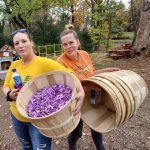
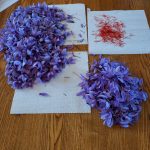
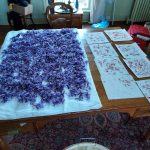
The preparation of saffron is reportedly difficult, which I have to disagree with. The flowers are easy to pinch off mid stem; they go into a half bushel basket that even when full is an easy carry to the house. The picking lasts about four days — we wait until the flowers have fully bloomed and the stigmas are deep orange. We have two rotations for picking: one late morning (the flowers will close up at night) after they open, and another in midafternoon.
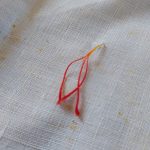
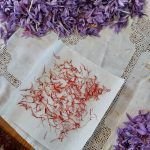
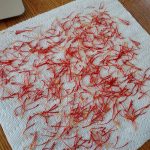
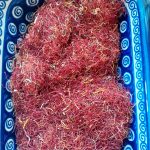
Saffron season evenings are spent pulling off the petals and stamens and laying the stigmas carefully on a white linen cloth in a bright well-ventilated room to dry. You can also carefully dry them in a low heat oven at about 150 degrees Fahrenheit. I find this risky and may overdry the saffron. You want it to be between 7 to 10 percent moisture.
Testing for proper dryness
A good way to test is when you bend the thread it will snap cleanly in half while maintaining a slightly elastic quality that preserves the spice’s essential oils. If it is too moist, above 12%, your spice will mold. Below 5%, the saffron has been over-dried. It becomes incredibly brittle, easily turns into dust, and loses weight as well as trade value.
Air drying
After about two days, the stigmas will have shrunk down to about two thirds of their original size and will be dry to the touch. When they bend and cleanly break with a bit of initial bend, this is the right time to put them in a well-sealed container preferably not glass. You don’t want the spice exposed to light. Our saffron is weighed and packaged at this stage. There will be some slight additional loss of weight as the spice ages and may dry out more depending on how you store it.
Some producers clip the creamy ends of the stigmas. I do not. They are a badge of authenticity.
For my personal use I also dry and save the stamens. They are a happy yellow color, so they don’t give off the traditional rich saffron color when cooking, but the flavor is great, and will double your yield.